
close
Choose Your Site
Global
Social Media
loading
loading


The printing process of jigsaw puzzles is different from that of ordinary printed products, because jigsaw puzzles involve not only the printing of images, but also multiple steps such as material selection, cutting and packaging. The following is the printing and production process of jigsaw puzzles:
1. Image selection and design
The production of jigsaw puzzles starts with the selection of images. Usually, designers will choose high-resolution images because jigsaw puzzles need to be enlarged and printed on large areas of materials. Images can be landscapes, works of art, cartoon characters, animals, buildings, etc. Designers also need to consider the difficulty of the puzzle. Complex patterns or areas with similar colors usually make the puzzle more challenging.
2. Image processing and typesetting
Before printing begins, the image will be processed and adjusted by computer to ensure that the resolution, color and composition are suitable for printing. The image may need to be color-corrected to ensure that the final printed puzzle is realistic in color and that all details are clearly presented on each piece of the puzzle.
3. Material selection
Jigsaw puzzles are usually made of strong and durable cardboard or wood. The following are common puzzle materials:
Cardboard: Most jigsaw puzzles use thick cardboard that is strong enough to withstand repeated disassembly and assembly.
Wood: Some high-end or vintage puzzles are made of wood, which has a better texture and durability, but is more expensive.
4. Image Printing
The image of the puzzle is usually printed using high-quality printing technology to ensure vivid colors and clear details. Common printing methods include:
Offset Printing: The image of the puzzle is usually printed on paper using offset printing technology, and then attached to cardboard or wood. Offset printing technology can ensure stable image quality during large-scale production.
Digital Printing: Digital printing technology is suitable for small batches of customized puzzles, and can print specific designs quickly and flexibly.
5. Pasting the Image
After the image is printed, the printed paper is precisely pasted to the base material (cardboard or wood) of the puzzle. This process requires ensuring that the paper is close to the surface without bubbles or wrinkles to ensure the smooth appearance of the final puzzle.
6. Coating Protection
In order to protect the image of the puzzle from wear and fading, a smooth coating is usually added to the surface. This coating can be matte or glossy, which plays a role in protecting and enhancing the visual effect of the image. This step can improve the durability of the puzzle and extend its life.
7. Die-Cutting
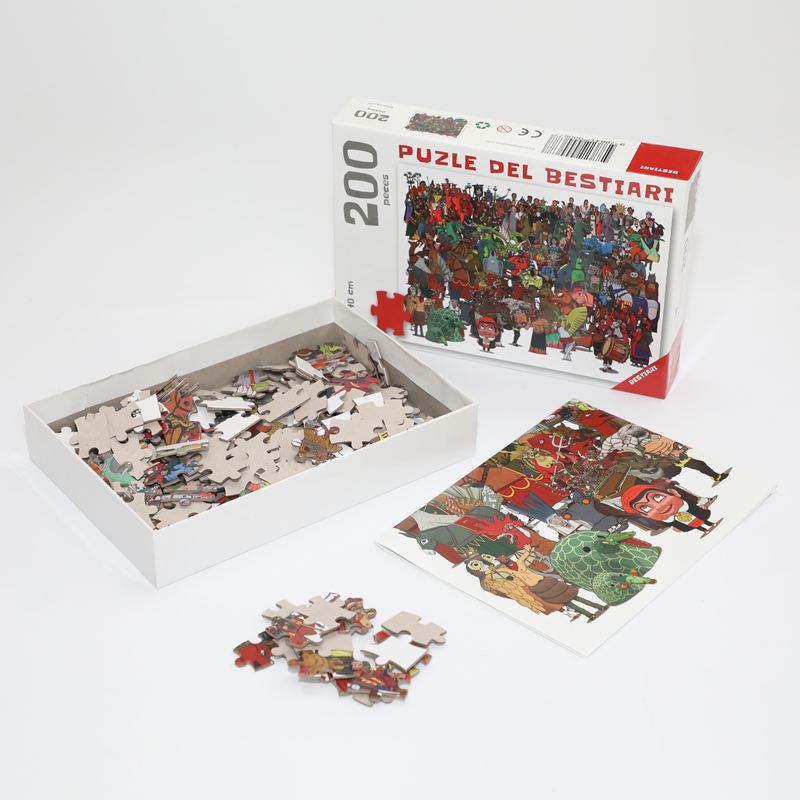
The key step in making a puzzle is to cut the image into multiple pieces. This process uses die-cutting technology, which uses a precision steel knife die to cut the puzzle board into hundreds or thousands of small pieces according to the preset shape. The shape of the puzzle pieces is determined by the design. Common puzzle pieces have jagged edges, and there are also some special shapes.
The quality of the die-cutting determines the splicing effect and feel of the puzzle pieces, so the die must be very precise to ensure that each piece can be seamlessly connected. In addition, the pieces after die-cutting will be trimmed to remove burrs on the edges and ensure that the edges of each puzzle are smooth.
8. Quality Inspection
After cutting, the puzzle will be quality checked to ensure that the pattern of each piece is clear, there are no missing pieces or damage, and all the pieces can be smoothly spliced. This step is very important, especially for high-end or custom puzzles, which have high quality requirements.
9. Packaging
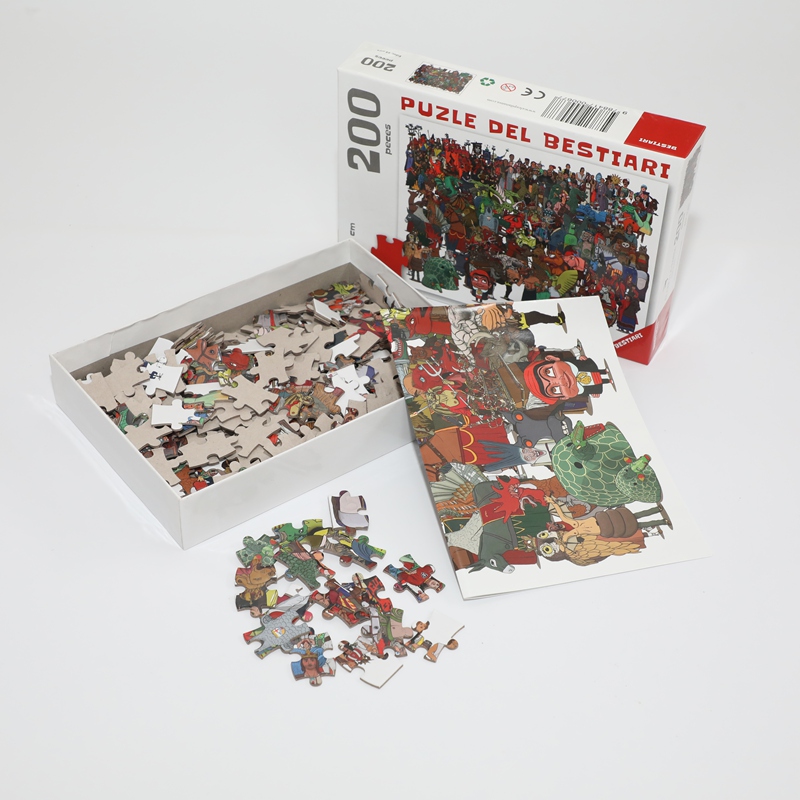
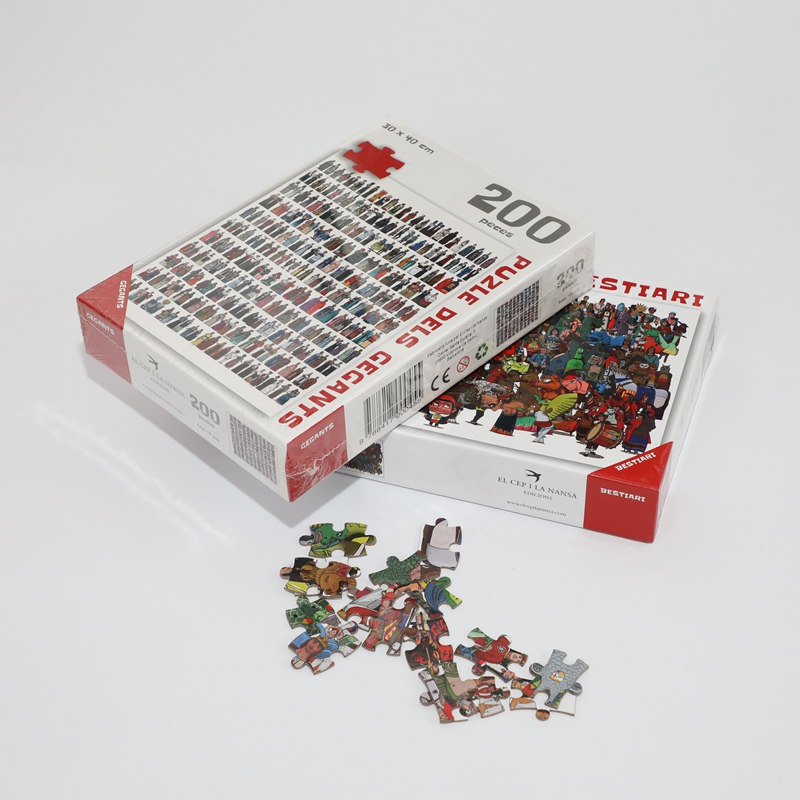
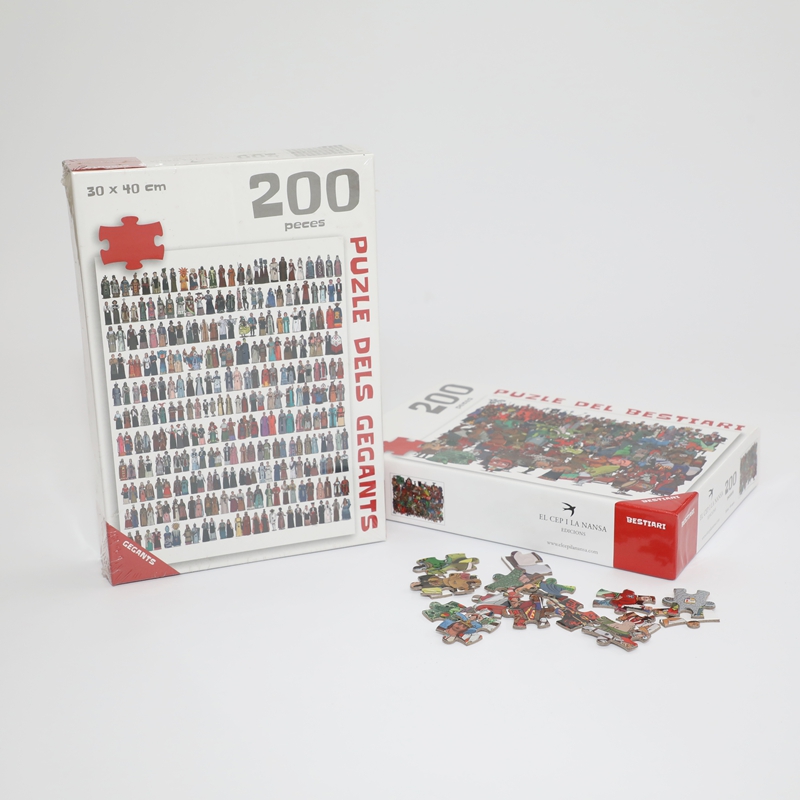
Packaging for puzzles usually includes a box with an image of the completed puzzle printed on it for reference. The packaging also includes the difficulty of the puzzle (such as the number of puzzle pieces), as well as other possible additional content, such as the historical background of the puzzle, brand logo, etc. High-end puzzles may also come with special storage boxes or bags.